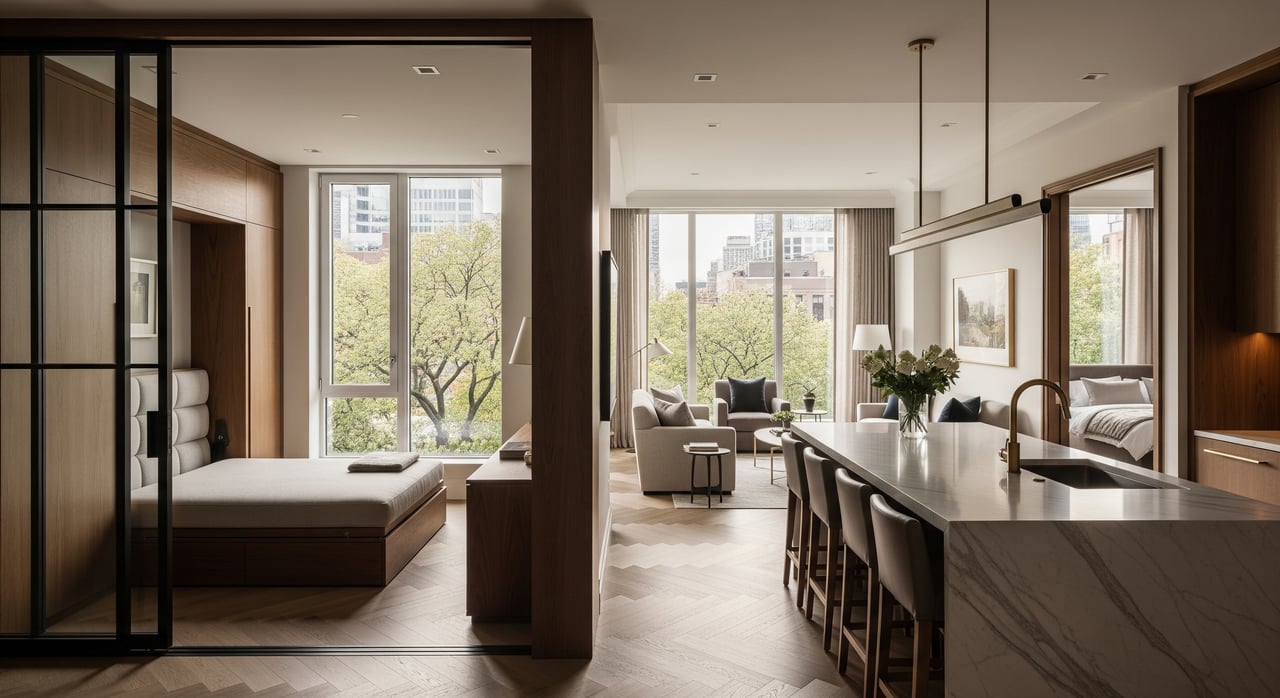
Torn between a 1+den and a true 2‑bed in Yorkville? You are not alone. This choice affects how you live day to day, what you spend each month, and how your unit performs when you rent or resell. In this guide, you will learn how each layout functions, what drives demand in Yorkville, and how to compare costs with confidence. Let’s dive in.
Yorkville condo context
Yorkville sits at the Yonge and Bloor corridor with luxury retail, dining, and quick access to Bloor‑Yonge and Bay stations. You are steps to the Royal Ontario Museum, the University of Toronto, and major hospitals. This draws affluent downsizers, professionals, international buyers, and investors.
Buildings range from amenity‑rich luxury towers to boutique mid‑rises and older purpose‑built options. Fees tend to reflect amenities and brand. In many Yorkville addresses, finish quality, views, and building reputation add meaningful premiums, sometimes more than the bedroom count alone.
Before you choose a layout, review the latest local figures on supply, days on market, price per square foot, and rental demand for both 1‑bed/1+den and 2‑bed units. Current TRREB, Urbanation, CMHC, and MLS snapshots will help you time the market and set realistic expectations.
What 1+den and 2‑bed really mean
A 1+den is a one‑bedroom with an extra small room. The den is often designed for an office, storage, or an occasional guest area. It may not meet the legal requirements for a bedroom.
A 2‑bed has two rooms that are officially designated bedrooms and generally meet code. If you need two true sleeping rooms with proper egress, a 2‑bed is the safer bet.
Day‑to‑day living: key differences
Space and circulation
- 2‑beds usually give you flexible living: separate rooms for a child, guests, or a roommate.
- 1+den can feel efficient and open, but the den can be tight if used as a full‑time bedroom.
Privacy and natural light
- 2‑beds provide two distinct private spaces with doors and often closets.
- Dens may sit off the living area and lack an exterior window or full door, which reduces privacy.
Work‑from‑home needs
- If your work calls for focus and video calls, a separate bedroom‑turned‑office in a 2‑bed offers better sound separation.
- A well‑placed den works for a lighter office setup without sacrificing living room space.
Storage and utility
- 2‑bed plans often include more closets and in‑suite storage.
- Many 1+dens rely on the den for storage, which can crowd the space.
Key takeaway: layout quality matters more than the label. A smart 1+den can outperform a cramped 2‑bed. Study the floor plan, window placement, and the path of travel.
Who each layout fits in Yorkville
Single professional
- 1+den often hits the sweet spot. Use the den for a true office or a guest nook, and enjoy lower carrying costs.
Couple with frequent guests or dual WFH
- A 2‑bed usually fits better. You get a dedicated office or guest room without giving up privacy.
Roommates or co‑living
- A 2‑bed is the practical choice. Separate legal bedrooms and similar sizes help balance rent splits and reduce conflict.
Downsizers and pied‑à‑terre buyers
- Both can work. Choose based on how often you host and whether you want a dedicated office. In Yorkville, building quality and amenities can outweigh bedroom count.
Investors
- Both layouts rent well to different tenants. A 2‑bed broadens your pool to couples and roommates. A 1+den appeals to single professionals and couples who value location and finishes. Note that City of Toronto rules limit whole‑home short‑term rentals to a principal residence.
Resale and rental appeal
A 2‑bed typically reaches a wider buyer pool, which can help resale liquidity. It suits many scenarios: two professionals, a couple with a child, or roommates. That breadth can translate into faster resale in more market conditions.
A 1+den targets a more focused audience, often single professionals, empty‑nesters, and pied‑à‑terre seekers. In Yorkville, a high‑floor 1+den in a prestigious building with strong amenities can hold appeal even with a smaller footprint.
On the rental side, 2‑beds tend to command higher total rent, though not always more per square foot. They can reduce vacancy by appealing to more tenant types. A 1+den can still rent well to professionals who prioritize location and building quality over space.
Cost considerations in Yorkville
Purchase price and premiums
- A 2‑bed usually sells for more in total because of the extra bedroom and larger size. Price per square foot varies by building, finishes, and view.
- In luxury buildings, beyond the bedroom count, finishes, floor level, and brand can add meaningful premiums.
Condo fees and what they include
- Fees often scale with unit size and amenity package. A smaller 1+den can carry lower total fees. Fee per square foot may be similar across unit types in the same luxury building.
- Confirm inclusions such as heat, water, internet, and concierge services. Amenity‑rich towers often charge more but can support long‑term value.
Parking and lockers
- In Yorkville, parking and lockers are frequently separate assets. They can add to purchase price and carrying costs but may boost rentability or resale.
Investor math: yield and risk
- Gross rent multiplier (GRM) = Purchase price divided by annual gross rent.
- Capitalization rate (cap rate) = Net operating income divided by purchase price.
- Small changes in rent, vacancy, or fees can swing returns, especially on smaller units. Model conservative vacancy and expense assumptions for both layouts.
How to decide: a quick framework
- Pull 6 to 12 recent sold comparables for each layout in the same building or on the same block. Note price, days on market, level, and view.
- Review recent rental transactions and active rental listings for both 1‑bed/1+den and 2‑bed units in Yorkville to estimate achievable rent.
- Calculate GRM and cap rate using realistic vacancy and expenses, including condo fees, insurance, and utilities.
- Compare fee per square foot and fee as a share of gross rent. High fees can erode cash flow.
- Weigh non‑financial factors: how you live, privacy needs, light, and storage. If you will work from home daily or host often, a 2‑bed may be the better long‑term fit.
Showing and listing checklist
- Confirm whether the den meets legal bedroom standards: window size and egress, door, and closet. Ask for the original floor plan and any occupancy certificates.
- Verify interior square footage and how it is allocated among living room, bedroom(s), and den.
- Study the floor plan for flow and privacy. Are bedrooms split or next to the living area?
- Check orientation and natural light. Note whether the den has a window.
- Inventory storage: closets, pantry, locker, and any in‑suite utility space.
- Clarify condo fee inclusions and what you pay separately.
- Evaluate building amenities and the fees that support them.
- Collect at least three recent comparable sales with similar layout, floor, and view.
Quick pros and cons
1+den: pros
- Lower total price and fees compared to most 2‑beds in the same building.
- Efficient footprint with a dedicated office nook.
- Attractive for pied‑à‑terre use or first purchase in Yorkville.
1+den: watch‑outs
- Den may not be legal as a bedroom. Less privacy for long‑term guests or roommates.
- Limited storage compared to 2‑beds.
- Resale audience is more focused.
2‑bed: pros
- Two true bedrooms increase flexibility for guests, family, or roommates.
- Broader buyer and tenant pools can support resale and reduce vacancy.
- Often better separation for work‑from‑home.
2‑bed: watch‑outs
- Higher total purchase price and condo fees.
- Layout quality varies; small second bedrooms or awkward circulation can limit value.
- Higher carrying costs mean your rent assumptions matter more.
Bottom line: which layout works?
If you value efficiency and plan to live solo or as a couple, a well‑designed 1+den in a strong Yorkville building can be a smart buy. If you need privacy, flexibility for guests, or you want to widen your future resale and rental audience, a 2‑bed is usually the better choice. In Yorkville, the building’s reputation, finishes, and light can move the needle as much as the bedroom count, so always compare real floor plans in real buildings.
Ready to compare actual Yorkville listings side by side and run the numbers on rent, fees, and resale? Reach out to Catherine Mortimer for a tailored, data‑driven plan.
FAQs
What is the difference between a 1+den and a 2‑bed in Yorkville condos?
- A 1+den adds a small flex room that often is not a legal bedroom, while a 2‑bed includes two legal bedrooms that meet code.
Is a den a legal bedroom in Toronto condo listings?
- Usually not unless it meets code for egress, window, door, and closet; always verify with the floor plan and building documents.
Which rents better in Yorkville: 1+den or 2‑bed?
- Both rent well to different tenant groups; 2‑beds appeal to more tenants and can reduce vacancy, while 1+dens attract professionals and couples.
Are condo fees significantly higher for 2‑beds in luxury buildings?
- Total fees are often higher because the unit is larger, though fee per square foot varies by building and amenity package.
Can I convert a den into a bedroom in a Yorkville condo?
- Sometimes, if you can add compliant egress and a door and get approvals; confirm feasibility with building management and local codes.