If you love architecture, Annex and Yorkville reward slow looking. Within a relatively short walk, you can move from village-era house forms to gracious tree-lined residential streets and then into a distinctly modern apartment landscape. If you want to understand why this part of Toronto feels so layered and memorable, this guide will help you read the streets with a sharper eye. Let’s dive in.
Why Annex-Yorkville Feels So Distinct
Annex-Yorkville is not one uniform district. City heritage planning treats Yorkville Village, Madison Avenue, East Annex, and West Annex as related but distinct character areas, each with its own rhythm and building pattern.
That difference is exactly what makes the area so rewarding for architecture lovers. The story is not about one signature style. It is about how house form, street scale, materials, and later redevelopment work together over time.
Yorkville began as a village and was annexed to Toronto in 1883. Over time, it evolved from a 19th-century streetcar suburb into a layered urban district where homes, small businesses, apartment buildings, and mixed-use corridors now sit side by side.
Start With the Big Architectural Themes
Before you focus on individual streets, it helps to know what to look for. In the West Annex, the strongest pattern is the coexistence of older house-form streets and later apartment streets.
The area includes Edwardian Classical and Modernist buildings, along with Queen Anne Revival, Colonial Revival, Bay and Gable, and Period Revival examples. The local Annex style is often described as a hybrid of Queen Anne Revival and Richardsonian Romanesque, which helps explain why so many homes feel both ornate and solid.
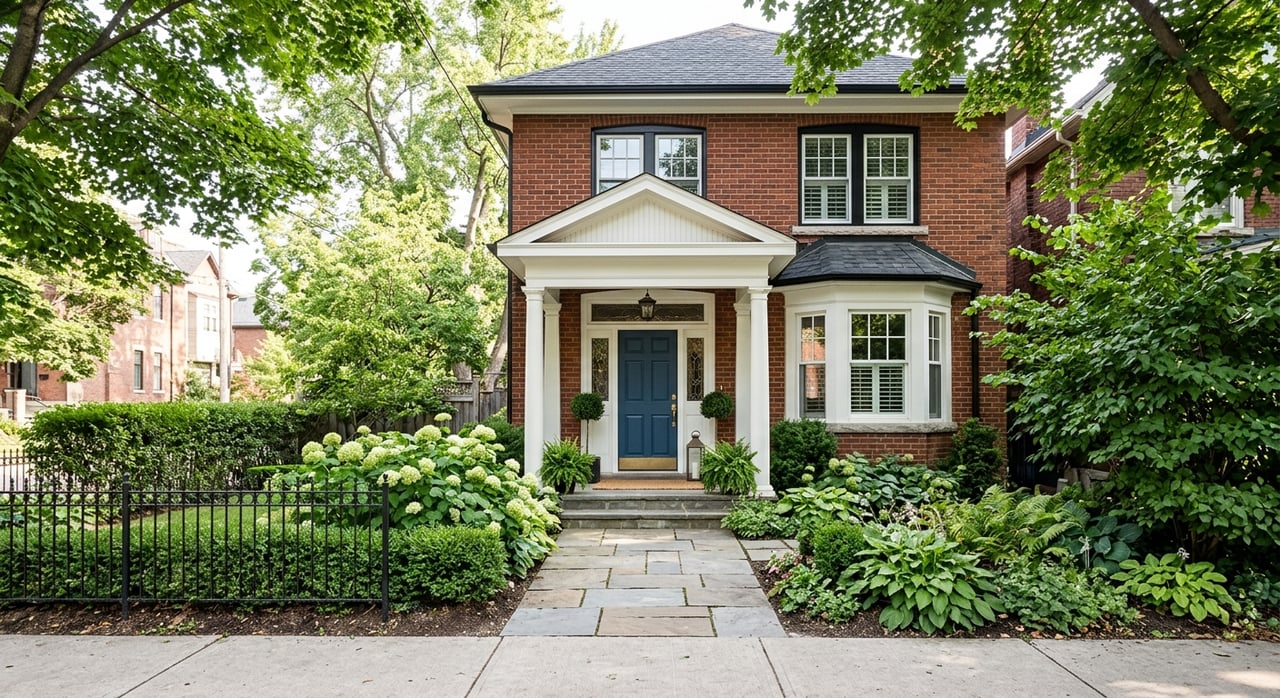
Style matters, but scale and materials matter just as much. Across Yorkville and the Annex, you will see recurring features like 2- to 3-storey house forms, brick and stucco walls, vertical windows, porches, front steps, and a steady rhythm of bays and rooflines.
The public realm is part of the architectural experience too. Mature trees, landscaped front yards, and streets where cars are mostly kept on the street rather than in front of houses all help shape the feel of the neighborhood.
Yorkville Village Core Streets
Scollard, Yorkville, and Cumberland
If you want the clearest sense of old Yorkville, begin with Scollard Street, Yorkville Avenue, and Cumberland Street. These streets best capture the area’s origins as a compact, walkable village.
Scollard began with wood semi-detached houses on narrow lots. Cumberland developed with consistent rows of semi-detached wood structures, while Yorkville Avenue was marked by larger brick or brick-clad residential buildings.
What makes this trio especially interesting is how much of that original pattern still shapes the area today. Even after change in the mid-20th century, converted house-form properties and pedestrian connections remain central to the experience of walking here.
Yorkville Avenue is also one of the area’s best examples of adaptive reuse. Rows of Victorian housing proved flexible enough to support later uses like coffee houses, music venues, and galleries, showing how residential architecture can continue to shape a street long after its original use changes.
Cumberland Street adds another layer through its mid-block connection character. The pedestrian links between streets help preserve the intimate, village-like feeling that makes this part of Yorkville feel so different from larger downtown corridors.
Hazelton and the Village Side Streets
Hazelton Avenue’s Gracious Scale
Hazelton Avenue offers a different kind of architectural pleasure. Compared with the tighter grain of nearby side streets, Hazelton reads as broader, greener, and more stately.
According to the Yorkville-Hazelton heritage planning framework, larger houses tended to cluster on Hazelton because the lots were bigger and the street was wider. On nearby Bishop, Berryman, and Scollard, houses were generally smaller and the lots narrower.
That difference in scale is easy to feel when you walk it. Hazelton’s tree canopy creates what the City describes as an intimate street vault, and the limited front-yard parking helps keep the architecture and landscaping at the forefront.
One notable landmark is 35 Hazelton Avenue, the former Olivet Congregational Church, now the Heliconian Club. It gives the street an institutional and cultural anchor while still fitting into the broader house-scale fabric around it.
Madison Avenue and West Annex Character
Madison’s Preserved Residential Fabric
Madison Avenue is one of the clearest heritage streets in the West Annex. It is designated as the West Annex Phase 1 Madison Avenue Heritage Conservation District, which reflects the strength and consistency of its residential character.
The City describes Madison as a street with a significant collection of residential houses designed in the prevailing early-20th-century styles by notable Toronto architects. For architecture lovers, that means you are not just looking at attractive houses. You are also seeing a coherent streetscape with a strong design pedigree.
A representative example is 12 Madison Avenue, a circa-1892 house within the district. Even if you are not cataloguing every detail, this is the kind of street where the value lies in the ensemble: setbacks, rooflines, materials, porches, and the steady cadence of façades.
Spadina, Walmer, and St. George
Where Modernism Enters the Picture
To understand Annex-Yorkville fully, you need to see where the story shifts. Spadina Road, Walmer Road, and St. George Street show the transition from older house-form streets to apartment-led urbanism.
The West Annex study notes that the major apartment-building wave from 1950 to 1969 was concentrated on Walmer Road, lower Spadina Road, and St. George Street. This period introduced a modernist layer that now forms an essential part of the neighborhood’s architectural identity.
For many visitors, this is where the walk gets especially interesting. Instead of seeing modern apartment buildings as interruptions, it helps to see them as part of the area’s next chapter.
Walmer Road includes notable modernist apartment landmarks such as 35 Walmer Road and 44 Walmer Road, both designed by Uno Prii. These buildings reflect the more expressive side of mid-century apartment design and add a very different visual rhythm to the streetscape.
Spadina Road offers another major stop. At 41-45 Spadina Road, Spadina Gardens stands at the corner of Spadina Road and Lowther Avenue as a four-and-a-half-storey apartment building that the City has identified as one of Toronto’s first six apartment buildings, with only two of those six still remaining.
That makes it important not only for its design, but also for what it says about the city’s early apartment history. It is also a useful example of how heritage and redevelopment now interact, since the City approved alterations to the designated property in connection with a new mixed-use building in 2024.
Bloor and Dupont as Edge Streets
Mixed-Use Pressure and Change
Bloor Street West and Dupont Street help frame the edges of the story. These are not quiet residential streets. They show how commerce, culture, and redevelopment pressure have long shaped the area.
The West Annex study describes Bloor Street West as a commercial and cultural corridor associated with restaurants, cafes, boutiques, pubs, movie theatres, and music venues. In architectural terms, it reads as a more public-facing edge where street life and building form work together differently than on interior residential blocks.
Dupont Street has also served as a commercial service street, though it has seen more sweeping change in recent years. If you want to understand the contrast between protected residential character and evolving urban frontage, these edge streets are worth including in your walk.
Quieter Interior Streets to Add
Kendal, Brunswick, and Admiral
If you have extra time, quieter interior streets can round out the picture. They show how later infill and low-rise apartment development fit into the broader West Annex fabric.
Kendal Avenue is a useful example because the West Annex study notes a concentration of houses at the south-end bend dating from 1930 to 1949, along with nearby later low-rise apartment buildings. That mix reveals how the neighborhood continued to evolve without losing its largely residential feel.
Brunswick Avenue also appears in the study as an infill street with modernist apartment buildings. It is a reminder that the area’s architectural story is not confined to the most famous addresses.
How to Read New Development Here
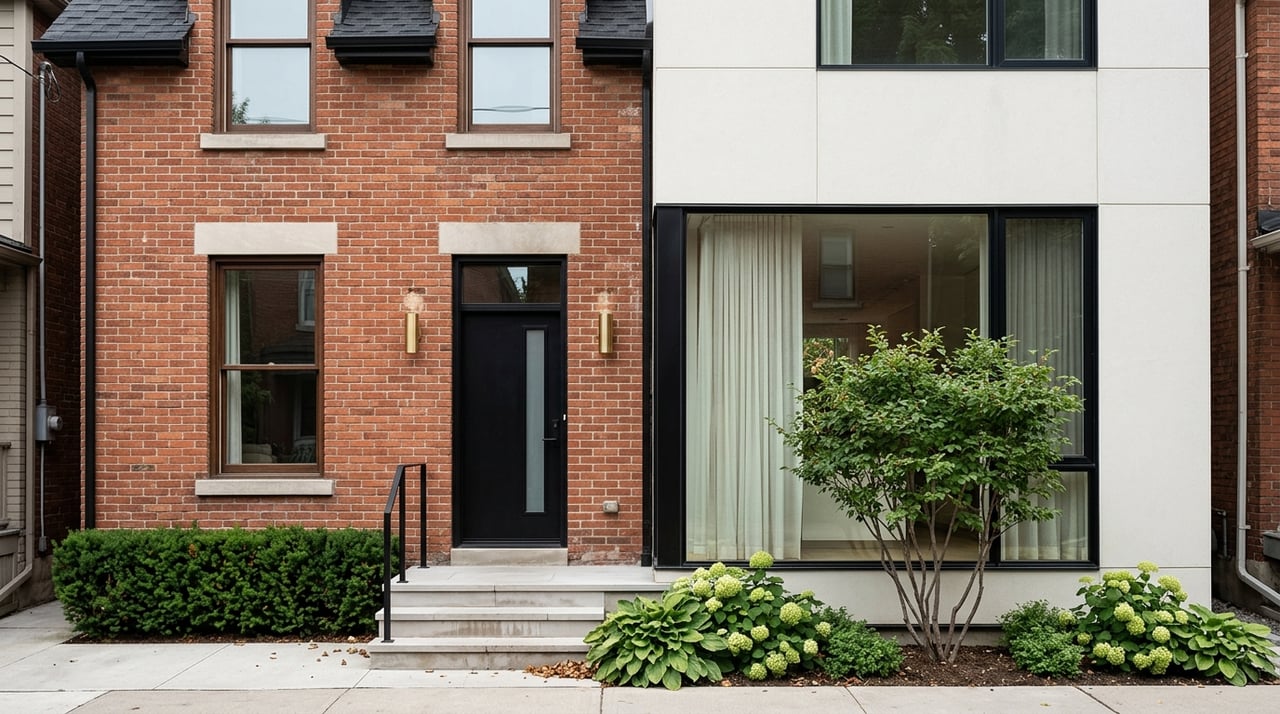
Heritage and Change Work Together
One of the most important things to understand about Annex-Yorkville is that it is not treated as a frozen district. It is a managed-change neighborhood, where heritage planning aims to guide growth rather than stop it altogether.
In Toronto, owners of designated Part IV and Part V properties need heritage permits before altering or demolishing them. Properties within Heritage Conservation Districts are reviewed through Toronto Building using the relevant district plan.
The City also distinguishes between listed and designated properties. Listed properties are not designated, but demolition proposals trigger 60 days’ notice and can lead to further evaluation or a heritage impact assessment.
In Yorkville, planning tools have also been used to protect the pedestrian realm. A 2017 zoning amendment increased minimum front lot line setbacks in the Village of Yorkville to help protect local character and public space.
This planning context is still evolving. The City’s 2025-26 Bloor-Yorkville Cultural Heritage Resource Assessment identified 88 properties with potential cultural heritage value or interest and recommended study of part of the Yorkville Village Core as a potential Heritage Conservation District, while the West Annex Phase II study remains active as of 2026.
For architecture lovers, this means the neighborhood is still being interpreted in real time. You are not just looking at preserved buildings. You are seeing an active conversation about how heritage streetscapes and new density can fit together.
A Simple Walking Sequence
The Best Order to Experience It
If you want a clear route, focus on three distinct experiences. This sequence follows the area’s evolution and makes the contrasts easy to appreciate.
- Begin in Yorkville Village Core on Scollard Street, Yorkville Avenue, and Cumberland Street to see the intimate village fabric.
- Move to Hazelton Avenue and, if time allows, nearby side streets for the broader lots, larger houses, and tree-canopied residential scale.
- Continue to Madison Avenue for one of the clearest heritage residential streets in the West Annex.
- Finish at Spadina Road, Walmer Road, and St. George Street to see the apartment and modernist chapter of the neighborhood’s story.
This route helps you understand the area as a sequence, not a collection of isolated landmarks. That is the real key to appreciating Annex-Yorkville.
If you are exploring Annex-Yorkville with an eye on real estate as well as design, the streets can tell you a great deal about scale, setting, and how heritage character shapes daily living. For a personalized perspective on homes, condos, and evolving opportunities in central Toronto, connect with Catherine Mortimer.
FAQs
What streets are best for architecture lovers in Yorkville?
- Scollard Street, Yorkville Avenue, Cumberland Street, and Hazelton Avenue are strong places to start because they show Yorkville’s village-era form, adaptive reuse, and residential scale.
What makes Madison Avenue important in the Annex?
- Madison Avenue is important because it is part of the West Annex Phase 1 Madison Avenue Heritage Conservation District and contains a strong collection of early-20th-century residential houses.
Where can you see modernist apartment architecture in Annex-Yorkville?
- Spadina Road, Walmer Road, and St. George Street are key streets for modernist apartment architecture, including notable Uno Prii-designed buildings on Walmer Road.
Why is Yorkville Avenue significant for adaptive reuse?
- Yorkville Avenue is significant because Victorian house rows there were well suited to later uses such as coffee houses, music venues, and galleries while retaining their house-form presence on the street.
How does Toronto manage heritage change in Yorkville and the Annex?
- Toronto manages heritage change through heritage permits for designated properties, district-plan review in Heritage Conservation Districts, and review processes for listed properties when demolition is proposed.
What is the easiest way to understand Annex-Yorkville’s architectural story?
- The easiest way is to experience it in sequence: village streets in Yorkville, larger residential streets like Hazelton and Madison, and then the apartment and modernist corridors on Spadina, Walmer, and St. George.